Getting started · Guide
The kinds of inbox
Permanent, one-sender, prefix and temporary. What each one is for, and who it takes mail from.
Each kind of inbox answers a different question: who should be able to write to this address, and for how long.
| Kind | Takes mail from | Ends | Counts on your plan |
|---|---|---|---|
| Permanent | anyone | never | yes |
| One-sender | the first sender who writes, and up to four more you let in | when you choose | no |
| Prefix | for each address made under it, the first sender who uses it | when you choose | yes |
| Temporary | anyone, until it ends | on its end date | no |
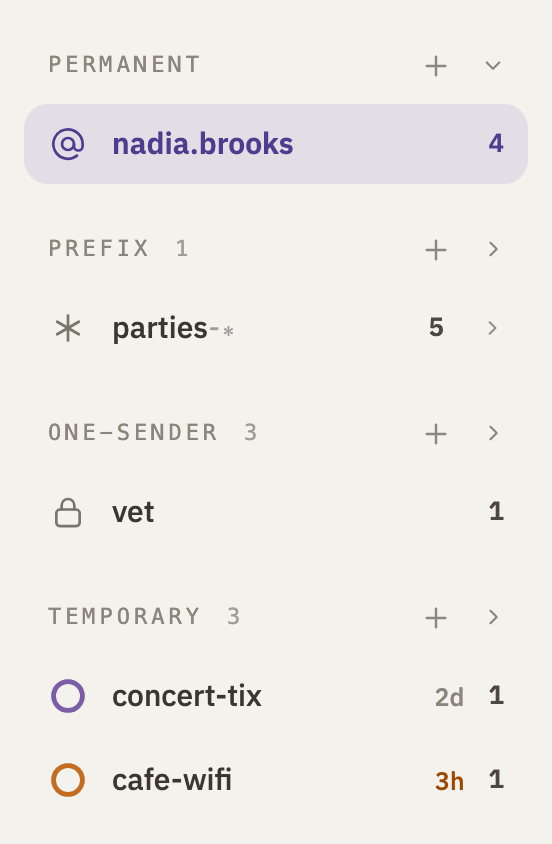
Permanent
An address to publish: on a website, a business card, a profile. It takes mail from anyone and never expires. You can switch it off, and every account keeps at least one.
One-sender
For one company or person. It locks to the first sender who writes to it and bounces everyone else, so if the address leaks, it's no use to anyone. You can let up to five senders in.
Let more senders into a one-sender inbox
Prefix
A rule that makes addresses as you need them. With the prefix shop-, give a site shop-garden@yourname.clova.email without making anything first: the address is made by the first message to it, and locks to that sender. A prefix is at least 5 characters long, and makes up to 50 addresses.
Temporary
For something you'll need briefly: a receipt, a trial, a download. It takes mail until its end date, then bounces anything new. When you make it, you choose whether its mail is kept or deleted after it ends: Receipts keeps it, Throwaway deletes it.
And the spam folder
It isn't a kind you make. Mail that fails the checks its sender's own domain asks for goes there instead of an inbox, and it's deleted after about 30 days. You'll find it in the account menu.
Did this help?
Thank you for telling us.